

Who Can Be Held Liable in a Truck Accident Case in Riverside?
April 5, 2026
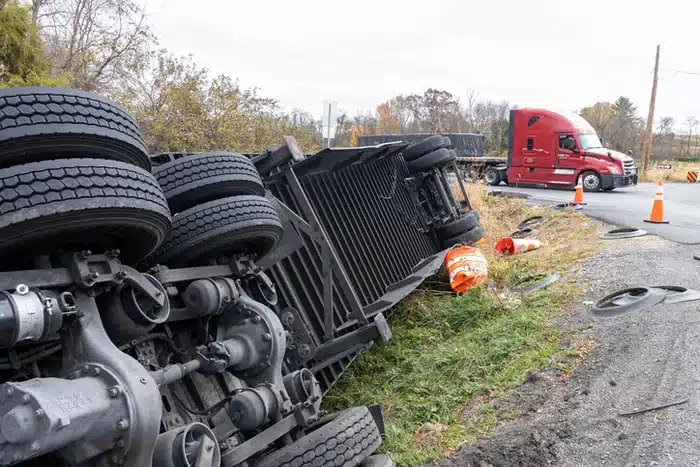
Liability in a Riverside truck accident case can fall on multiple parties — including the truck driver, the trucking company, the vehicle’s owner, cargo loaders, parts manufacturers, and even government entities responsible for roadway maintenance. A thorough investigation is the only way to determine exactly who is responsible.
Understanding Liability in Truck Accident Cases
Determining fault in a truck accident is rarely simple. Unlike ordinary car crashes, commercial trucking involves multiple parties who each play a role in vehicle operation, maintenance, scheduling, and safety compliance. That means several people or entities may share responsibility when something goes wrong.
In Riverside, where major freight corridors like I-10, I-15 and SR-60 carry constant commercial traffic, determining liability is essential for recovering compensation. These cases often involve serious injuries, complex insurance arrangements, and federal safety regulations. Getting clarity early protects your rights and helps build a strong injury claim.
Common Parties Who May Be Liable
The Truck Driver
Truck driver negligence is one of the most common causes of commercial vehicle collisions. Drivers may be liable if they were:
- Speeding or driving aggressively
- Fatigued or violating hours-of-service rules
- Distracted by a phone, GPS, or dispatch device
- Impaired by alcohol, drugs, or prescription medications
- Failing to inspect equipment before a trip
Even if driver error is clear, the driver may not be the only liable party. In trucking cases, responsibility often extends beyond the person behind the wheel.
The Trucking Company
Trucking companies can be held liable for several reasons, including:
- Poor hiring or training practices
- Pressuring drivers to meet unrealistic delivery deadlines
- Failing to maintain or inspect vehicles
- Allowing violations of federal safety regulations
- Encouraging drivers to exceed hours-of-service limits
Under vicarious liability, a trucking company may also be responsible simply because the driver was performing job duties at the time of the crash.
The Owner of the Truck or Trailer
In some cases, the tractor, trailer, or both are owned by a separate entity. That owner may be liable for:
- Mechanical failures
- Poor maintenance
- Defective brakes or tires
- Faulty coupling devices
This is especially common in Riverside’s booming logistics and warehousing industry, where trailers are frequently exchanged at ports, warehouses, and distribution hubs.
Cargo Loading Companies
Improperly loaded cargo can cause a trailer to overturn, sway, or spill. Cargo handlers may be liable if they:
- Failed to secure loads according to FMCSA cargo securement rules
- Overloaded the vehicle beyond weight limits
- Distributed weight unevenly
Truck or Parts Manufacturers
If a defective component — such as brakes, steering systems, or tires — causes an accident, the manufacturer may be accountable. Examples include:
- Tire blowouts caused by manufacturing defects
- Faulty brake chambers
- Electrical failures leading to loss of control
Maintenance Contractors
Many trucking companies outsource maintenance to third-party shops. A maintenance provider may be liable if:
- A critical repair was done incorrectly
- The shop failed to identify worn or unsafe parts
- The mechanic falsified inspection reports
Government Entities
If unsafe road conditions contributed to the crash, responsibility could fall on the city, county, or state agency that manages the roadway. Examples include:
- Potholes or crumbling pavement
- Poor lighting
- Missing or obscured road signs
- Dangerous construction zones
Claims against government agencies require strict procedures and short deadlines, so fast action is essential.
Why Truck Accident Liability Is Complicated
Unlike car crashes where typically one driver is at fault, truck accidents may involve layered responsibility and multiple insurance policies. Commercial trucks often have:
- High liability limits
- Multiple insurers
- Electronic logging devices (ELDs)
- GPS tracking
- Company-maintained maintenance logs
Preserving this evidence is critical. Unfortunately, some records can be modified or destroyed within days unless requested through legal channels.
What Evidence Helps Determine Liability?
A strong investigation usually includes:
- Black box data: speed, braking activity, throttle position, and crash forces
- Driver logs: rest breaks and hours worked
- Maintenance and inspection records: show whether the vehicle was safe to operate
- Dashcam or surveillance footage
- Cargo manifests and weight tickets
- Accident reconstruction to determine how the crash occurred
Step-By-Step: What Happens During a Liability Investigation?
- Immediate Evidence Preservation: spoliation letters prevent destruction of logs and electronic data.
- Review of Police and CHP Reports: diagrams and observations provide essential context.
- Inspection of the Truck and Trailer: experts evaluate mechanical condition and compliance.
- Driver Background Check: includes training history, violations, and drug/alcohol test results.
- Company Safety Audits: evaluate compliance with federal regulations.
- Analysis of Roadway Conditions: identifies potential government fault.
- Apportioning Fault: California law allows recovery of damages even when multiple parties share responsibility (comparative negligence).
Common Misconceptions About Truck Accident Liability
“The truck driver is always the one at fault.”
Not necessarily. In many Riverside cases, negligent maintenance shops, shipping companies, or manufacturers also contributed.
“If the trucking company blames me, I must not have a case.”
Truck insurers frequently try shifting blame early. Independent investigation often reveals critical evidence they fail to mention.
“Only catastrophic crashes justify hiring a lawyer.”
Even non-fatal or moderate-injury collisions can involve complex insurance issues and high medical costs. Early representation helps preserve evidence and prevents lowball settlements.
“Can I sue even if I’m partially at fault?”
Yes. California follows a pure comparative negligence system. This means you can still recover compensation even if you’re partially at fault, but your award is reduced by your percentage of fault.
When You Should Contact a Lawyer
You should speak with a truck accident lawyer as soon as possible if:
- You were seriously injured
- A loved one was killed or hospitalized
- Fault is being disputed
- Multiple vehicles or companies are involved
- The trucking company or insurer contacts you directly
- You suspect logbook violations, fatigue, or mechanical defects
Early involvement of an attorney helps preserve evidence that might otherwise be lost. In complex cases, lawyers negotiate with insurers, who aim to minimize payouts. If facing high medical bills or long-term disability, legal expertise maximizes compensation. In California, contingency fees mean no upfront costs—you pay only if you win.
Helpful Resources on Trucking Standards, Safety, and Regulations
- Federal Motor Carrier Safety Administration Regulations
- Osha Trucking Industry Standards
- Insurance Institute for Highway Safety (IIHS)
Ready to Seek Help? Contact Us Today
If you or a loved one was injured or killed in a Riverside truck accident, determining liability is critical. Aitken*Aitken*Cohn has decades of experience taking on trucking companies, insurers, manufacturers, and government agencies to uncover the truth.
Contact us to schedule a free consultation and learn how we can help you pursue the compensation you deserve.