

California Vehicle Code § 21703: Following Too Closely
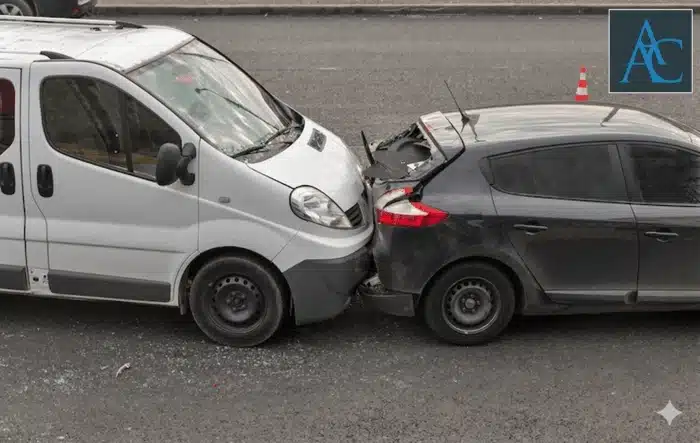
California Vehicle Code § 21703 is the state law that prohibits drivers from following another vehicle more closely than is reasonable and prudent based on speed, traffic, and roadway conditions. In plain terms, it requires drivers to leave enough space to react and stop safely. You can read the official statute on the California Legislature website. Guidance on safe following distance also appears in the California DMV Driver Handbook and public safety resources from the California Highway Patrol.
For injured people, this law matters because rear-end crashes are often caused by tailgating, distraction, speeding, or failing to account for traffic slowdowns, rain, glare, construction, or limited visibility. When a driver violates § 21703 and causes a crash, that violation can become important evidence in a personal injury claim.
What California Vehicle Code § 21703 Means in Plain English
Vehicle Code § 21703 does not set a fixed number of feet or car lengths. Instead, it uses a reasonableness standard. A driver must keep enough distance behind the vehicle ahead to respond safely to what is happening on the road.
That means the safe following distance changes with the circumstances. A driver may need more room when traffic is moving quickly on the freeway, when roads are wet, when it is dark, when visibility is poor, or when the vehicle ahead may stop unexpectedly. The DMV specifically warns drivers against tailgating and recommends using a time-based following rule to maintain a safe cushion.
Key Factors Under the Law
- Speed: Higher speeds require more stopping distance and more reaction time.
- Traffic conditions: Stop-and-go congestion, merging traffic, and sudden slowdowns increase rear-end crash risk.
- Roadway conditions: Rain, slick pavement, construction zones, loose gravel, and uneven surfaces can make stopping harder.
- Visibility: Fog, glare, darkness, smoke, and blocked sight lines reduce the time a driver has to react.
- Vehicle type: Large trucks, SUVs, commercial vehicles, and vehicles towing trailers need more distance to stop safely.
- Driver attention: Cell phone use, fatigue, distraction, and inattention make following too closely even more dangerous.
Key Takeaways
- Vehicle Code § 21703 requires a safe following distance.
- The standard is what is reasonable and prudent under current conditions.
- Rear-end collisions often involve evidence of following too closely.
- A violation can support negligence and liability in an injury claim.
- Road, traffic, weather, and visibility conditions all matter.
Real-World Examples of How Negligence Happens
1. Freeway slowdown in Orange County
A driver on the I-5 in Orange County is traveling at freeway speed during heavy commute traffic. The cars ahead begin braking because congestion builds near an interchange. The trailing driver is only a few feet behind the vehicle ahead and cannot stop in time. That rear-end impact may support a claim that the driver violated § 21703 by failing to leave a reasonable and prudent following distance.
2. Rain-slick streets in Santa Ana
During a rainy afternoon in Santa Ana, a driver continues following closely despite reduced traction and an increased stopping distance. When the lead vehicle brakes for a pedestrian in a marked crosswalk, the trailing driver slides into the rear bumper. In that scenario, the unsafe distance is even more significant because the wet pavement required added caution.
3. Stop-and-go traffic near Riverside construction
A motorist in Riverside approaches a construction zone where lanes narrow and traffic frequently stops. Instead of backing off, the driver tailgates and looks down at a phone. When vehicles stack up suddenly, a chain-reaction crash occurs. Evidence of distraction, combined with following too closely in a construction area, can strongly support liability.
4. Limited visibility at dusk in San Bernardino
At dusk in San Bernardino, glare and reduced light make it harder to judge distance. A trailing driver does not increase space and strikes a vehicle slowing for traffic ahead. Even without high speed, the failure to adjust for visibility can amount to negligent driving under § 21703.
5. Sudden traffic change near San Clemente
On a coastal roadway near San Clemente, traffic compresses unexpectedly when vehicles merge. A driver who is following too closely has no safe escape path and rear-ends the car ahead. The issue is not whether traffic slowed down. The issue is whether the rear driver left enough room to respond safely to a foreseeable traffic change.
How § 21703 Compares to Related California Driving Laws
Vehicle Code § 21703 focuses specifically on a driver’s following distance. It is often related to, but distict from, other driving laws that may be relevant in a rear-end crash investigation.
- Basic Speed Law: A driver can be traveling under the posted speed limit and still be unsafe if the speed is too fast for traffic or road conditions.
- Distracted driving rules: A driver who is texting or otherwise inattentive may fail to perceive traffic changes and follow too closely.
- Unsafe lane change or merge issues: Some rear-end collisions involve sudden merges, but the trailing driver still has a duty to keep a safe following distance whenever possible.
In many injury cases, more than one unsafe act contributes to the collision. That does not excuse tailgating. It simply means the facts must be investigated carefully.
Why This Law Matters in Personal Injury Cases
Vehicle Code § 21703 often becomes important during accident investigation, insurance negotiations, and litigation. Rear-end crashes may appear simple, but insurers often try to minimize injuries or argue that the lead driver stopped suddenly. A careful review of many factors, including distance, traffic flow, road conditions, vehicle damage, event data, witness statements, and crash reports can help show what really happened.
For injured victims, this law matters because it helps explain why the crash occurred. A driver who leaves too little room removes the safety margin needed to avoid a collision. That can be powerful evidence when proving fault and pursuing compensation through a personal injury claim. Learn more about the firm’s work on injury cases at Aitken Aitken Cohn.
Negligence and Liability in a Following-Too-Closely Case
In a plaintiff-side personal injury case, negligence usually turns on four core elements: duty, breach, causation, and damages.
Duty of care
Every driver in California has a duty to operate a vehicle with reasonable care. That includes maintaining a safe following distance, keeping a proper lookout, adjusting to traffic and weather, and being prepared to stop safely.
Breach of duty
A breach occurs when the driver fails to act as a reasonably careful driver would under similar circumstances. Tailgating, driving too fast for stop-and-go traffic, failing to slow in rain, or not accounting for visibility issues can all support a finding of breach.
Causation
The plaintiff must show that the unsafe following distance was a substantial factor in causing the crash. In rear-end cases, that often means proving the collision happened because the trailing driver had insufficient time and distance to avoid impact.
Damages
Finally, the injured person must prove actual harm. Common damages include physical injuries, medical expenses, income loss, future treatment needs, and pain and suffering. Without damages, there is no personal injury recovery even if the statute was violated.
Negligence analysis is at the heart of these cases. A traffic-law violation does not automatically decide every lawsuit, but it can be strong evidence that the defendant failed to use reasonable care.
Compensation Available After a Rear-End Collision
When a violation of § 21703 leads to an injury crash, the injured person may be able to recover compensation for losses caused by the collision. Depending on the facts, recoverable damages may include:
- Medical expenses: Emergency care, hospital bills, imaging, physical therapy, medications, and follow-up treatment.
- Lost wages: Income lost while recovering or attending medical appointments.
- Loss of future earning capacity: Reduced ability to work because of lasting injuries.
- Pain and suffering: Physical pain, emotional distress, inconvenience, and reduced quality of life.
- Future care costs: Ongoing treatment, rehabilitation, assistive devices, and projected medical needs.
Case value depends on the severity of injury, the available evidence, and how clearly liability can be established. For examples of the firm’s case outcomes, visit case results.
Local Relevance in Orange County, Santa Ana, Riverside, San Bernardino, and San Clemente
Following-too-closely cases arise throughout Southern California, but the fact patterns often reflect local roadway conditions. In Orange County personal injury lawyer cases, freeway congestion and abrupt slowdowns can make tailgating especially dangerous. In Santa Ana personal injury lawyer cases, urban intersections, pedestrian activity, and dense traffic can increase the risk of rear-end impacts. In Riverside personal injury lawyer matters, construction zones and high-volume commuter traffic often play a role. In San Bernardino personal injury lawyer cases, long travel corridors, trucks, and visibility changes may affect stopping distance. In San Clemente personal injury lawyer claims, coastal routes, merges, and variable traffic flow can create the kind of sudden slowdowns that expose unsafe following behavior.
Anyone injured in a rear-end collision should have the facts reviewed in the context of the specific roadway, traffic pattern, and crash sequence involved.
Frequently Asked Questions
What does California Vehicle Code § 21703 prohibit?
It prohibits a driver from following another vehicle more closely than is reasonable and prudent for the speed of traffic and the condition of the roadway.
Is the rear driver always at fault in a rear-end collision?
Not always, but the rear driver is often found at fault because drivers are expected to leave enough space to stop safely. Liability still depends on the evidence, including road conditions, traffic movement, witness accounts, and vehicle damage.
Does California law require a specific number of car lengths?
No. Section 21703 does not use a fixed-distance rule. The legal standard is whether the driver maintained a distance that was reasonable and prudent under the circumstances.
How can following too closely be proven after a crash?
Evidence may include the police report, witness statements, dashcam video, surveillance footage, vehicle damage patterns, skid marks, scene photographs, electronic vehicle data, and expert reconstruction analysis.
Can I still recover compensation if the insurance company says I stopped suddenly?
Yes. Sudden-stop arguments are common, but they are not automatic defenses. Drivers must anticipate normal traffic changes and leave enough space to react safely. The full circumstances need to be evaluated.
Why is § 21703 important in personal injury claims?
Because it helps show whether the at-fault driver breached the duty of care. A violation can support the argument that the defendant’s unsafe driving caused the rear-end collision and the plaintiff’s injuries.
Speak With Aitken Aitken Cohn About a Rear-End Collision Case
Vehicle Code § 21703 plays a central role in many rear-end collision claims because maintaining a safe following distance is
one of the most basic duties every driver owes to others on the road. Ignoring that responsibility can result in severe injury,
disputed insurance claims, litigation, and devastating financial losses.
Aitken Aitken Cohn represents victims in serious personal injury claims and understands how to build liability around roadway conduct, crash evidence, and damages. If you were hurt in a rear-end collision in Orange County, Santa Ana, Riverside, San Bernardino, or San Clemente, review your options with the firm. See our About the firm page.
Additional safety resources: California DMV safe driving guidance, California Highway Patrol traffic safety resources, and OCTA motorist safety guidance.
